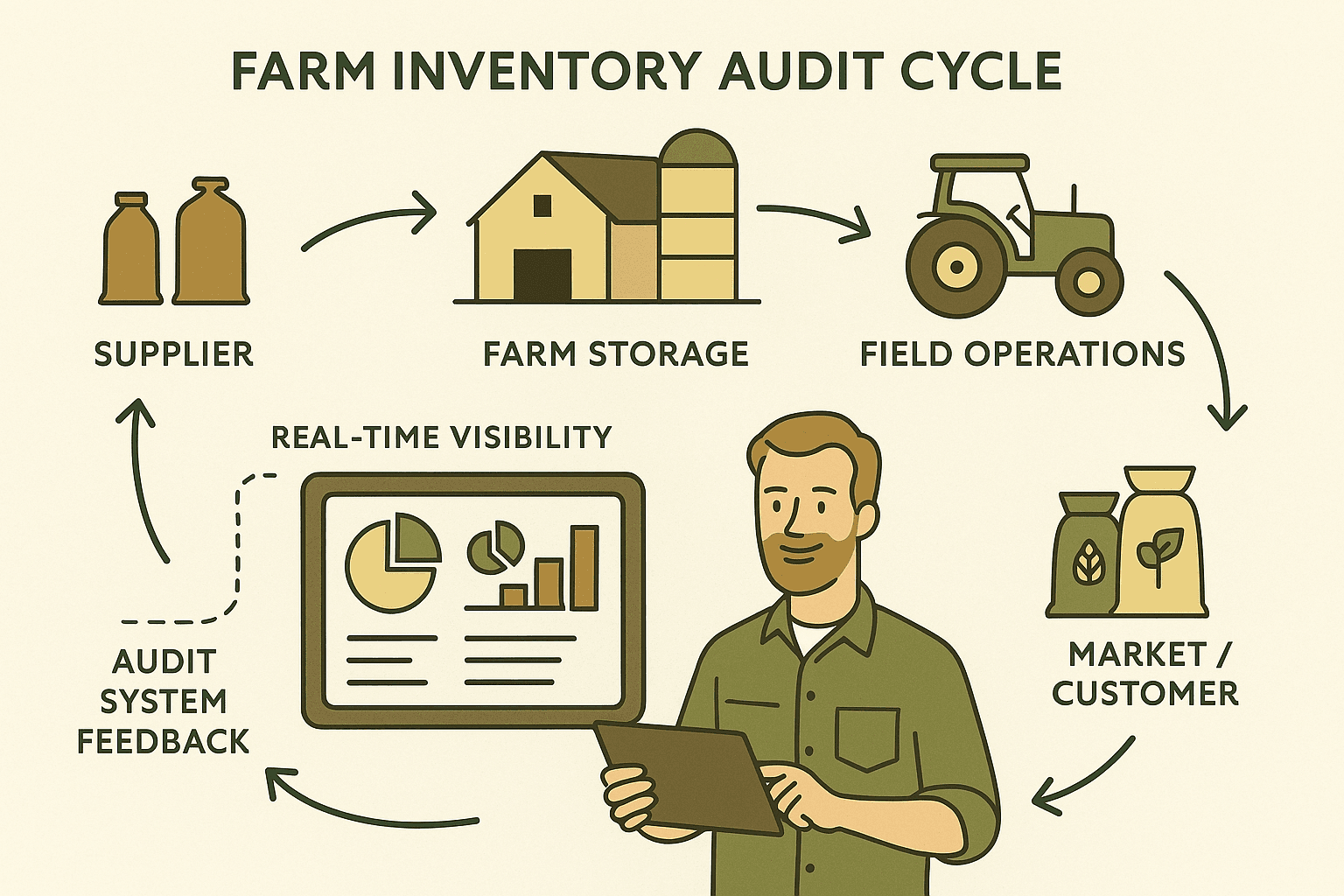
Unused fertilizer sitting in the shed, duplicate seed purchases, and expired chemicals are silent profit killers. Many small farms lose 5–15% of input value each year simply because inventory is not tracked. Good farm inventory management connects purchases, applications, and remaining stock so you always know what you have and what it cost.
This guide covers practical inventory systems for seeds, fertilizers, pesticides, fuels, and spare parts—and how software like AgroProfit links inventory to field operations and profit analysis.
Why Farm Inventory Tracking Matters
Without inventory records, farmers commonly:
- Buy inputs they already have
- Run out of critical products mid-season
- Lose track of product expiration dates
- Misallocate costs across fields and crops
- Fail audits for organic or food safety certification
Inventory is not just warehouse management—it is the bridge between purchase cost and field-level expense accuracy.
What to Track in Farm Inventory
Seeds
Record variety, lot number, quantity purchased, unit cost, storage location, and quantity used per field. Track germination or leftover seed for next season decisions.
Fertilizers
Track product type (N-P-K), bag or bulk quantity, purchase price, and applications by field and date. Remaining stock should update when you log an application.
Pesticides and Herbicides
Log product name, active ingredient, batch/lot, purchase date, quantity, and every spray event. Compliance and safety depend on accurate chemical records.
Fuel and Lubricants
Diesel and fuel often represent a large variable cost. Track deliveries, usage by operation or machine, and remaining tank levels.
Spare Parts and Consumables
Filters, belts, and nozzles prevent downtime. A simple minimum-stock list saves emergency trips during planting and harvest.
A Simple Inventory Workflow for Small Farms
- Receive: Log every purchase with quantity, price, supplier, and date
- Store: Note location and keep chemicals segregated and labeled
- Issue/Use: Deduct inventory when applied to a field or machine
- Reconcile: Monthly physical count vs. recorded stock
- Analyze: Review usage by crop, field, and season
The critical step is linking use to a field. Purchase alone does not tell you profitability—application does.
Connect Inventory to Field Costs and Profit
When fertilizer leaves storage and goes to Field A, that cost belongs to Field A. When seed is planted on Field B, Field B carries that seed cost. Farms that allocate inventory this way can answer:
- Which crop uses the most expensive inputs?
- Which fields have rising chemical costs year over year?
- How much unused inventory is tied up in capital?
- What is true cost per hectare after inventory is applied?
AgroProfit is designed for this workflow: log purchases, apply inputs to fields, and see remaining inventory and field-level costs without juggling multiple spreadsheets.
Inventory Best Practices
- One source of truth: Avoid separate notebooks and Excel files that drift apart
- Update the same day: Same-day entry prevents forgotten applications
- Use consistent units: kg, L, bags—pick units and stick to them
- Flag low stock: Set reorder points before peak season
- Review expired products: Dispose safely and write off lost value
- Export reports: Keep purchase and usage reports for accountants and auditors
Common Inventory Mistakes
- Recording purchases but not applications
- Estimating leftover stock instead of counting
- Mixing lots and losing traceability
- Ignoring fuel and small consumables
- Allocating all input costs at farm level only (no field split)
Getting Started This Week
- List current stock of seeds, fertilizers, and chemicals
- Enter opening quantities and approximate values
- Log every new purchase going forward
- Deduct inventory whenever you apply an input to a field
- Do a monthly reconciliation for 90 days
Start your free 60-day AgroProfit trial and connect inventory, field applications, and profit tracking in one system.
Conclusion
Accurate farm inventory management reduces waste, improves cash flow, and makes profit-per-field calculations trustworthy. Start with seeds, fertilizers, and chemicals, link every use to a field, and review stock monthly. The farms that know what they own—and where it was used—make better buying and production decisions every season.