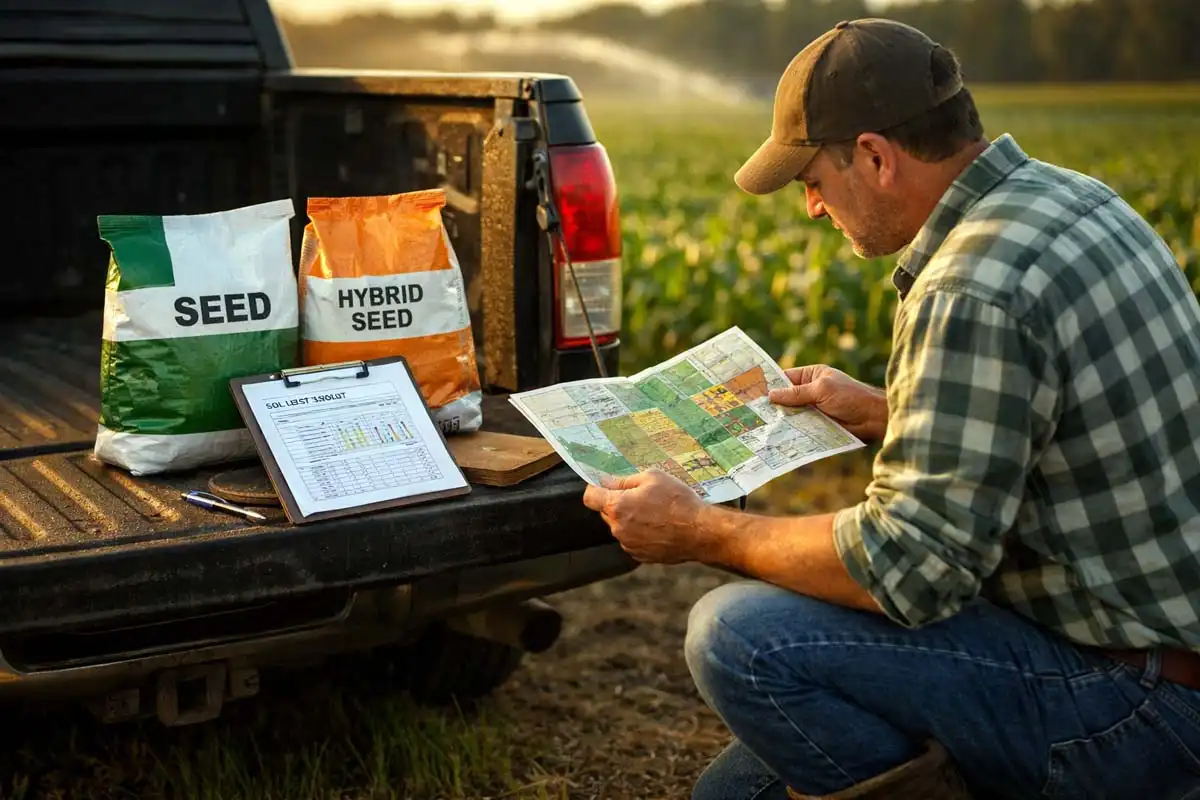
Regenerative agriculture is often discussed in idealistic terms. For working farms, it must also be practical and profitable. The goal is to rebuild soil function—organic matter, structure, biology, and water holding—while keeping cash flow and yields viable.
This guide translates regenerative principles into steps small and medium farms can implement, measure, and manage with tools like AgroProfit.
What Regenerative Agriculture Means in Practice
Common regenerative principles include:
- Minimize unnecessary soil disturbance
- Keep living roots and soil cover as much as possible
- Increase diversity in rotations and cover mixes
- Integrate organic matter returns where available
- Reduce reliance on inputs that mask soil problems
You do not need to adopt every practice at once. Start with changes that fit your equipment, climate, and markets.
High-ROI Regenerative Practices for Small Farms
1. Longer, Smarter Rotations
Add crops that break pest cycles and improve soil (legumes, small grains, cover periods). Track yield and cost changes by field across the rotation—not only one season.
2. Cover Crops Between Cash Crops
Cover crops reduce erosion, feed soil biology, and can cut nitrogen or herbicide needs over time. Measure seed and planting costs against fertilizer and weed control savings.
3. Reduced Tillage Where It Fits
Less tillage can protect structure and lower fuel costs, but poorly timed no-till can hurt establishment. Trial on selected fields and compare emergence, fuel use, and yields.
4. Organic Amendments and Residue Management
Manure, compost, and residue retention build organic matter when applied with nutrient accounting. Log applications by field so fertility programs stay balanced and costs stay visible.
5. Targeted, Not Blanket, Chemical Use
Regenerative does not always mean zero chemicals. It means scouting, thresholds, and precision so products are used when they pay.
Measure What Matters
Regenerative claims need farm data:
- Soil organic matter trends (test every 2–3 years)
- Input cost per hectare over time
- Yield stability in dry or wet years
- Fuel and labor hours for tillage/passes
- Profit per field across the rotation
Without measurement, regenerative farming becomes storytelling. With measurement, it becomes management.
AgroProfit helps you track field operations, input costs, and profitability so you can see whether regenerative changes improve soil outcomes and the farm balance sheet.
Transition Without Breaking Cash Flow
- Start on 10–20% of acres rather than converting everything
- Keep a control field for comparison
- Budget transition costs (cover seed, new passes, learning curve)
- Watch yield risk in the first 1–2 years
- Scale practices that improve margin or reduce risk
Banks, landlords, and family partners respond better to measured pilots than sudden whole-farm redesigns.
Markets and Premiums
Some buyers pay for regenerative or low-input claims, but premiums are not guaranteed. Build your system to be profitable even without premiums. If certification or program payments appear later, treat them as upside—not the only justification.
Common Mistakes
- Copying another region’s system without local adaptation
- Dropping fertilizer abruptly without soil and yield monitoring
- No records—unable to prove what worked
- Focusing on ideology over field economics
- Changing too many variables at once
Getting Started This Season
- Pick one regenerative goal (erosion, organic matter, or input reduction)
- Choose 1–2 practices aligned with that goal
- Select trial fields and define success metrics
- Log all related costs, operations, and yields
- Review after harvest and decide what to expand
Start your free 60-day AgroProfit trial and track regenerative practices alongside field costs and profits so soil improvements stay connected to real farm results.
Conclusion
Regenerative agriculture works for small farms when it is practical, gradual, and measured. Improve rotations, cover, and soil care in ways that protect cash flow. Use field-level records to prove which practices rebuild soil and which also protect profit. That combination is how regenerative farming becomes durable—not just trendy.